

01 Aug How do Aquatic Plants Breathe?
Aquatic plants breathe through gas exchange, photosynthesis, and respiration, all of which affect koi oxygen, water quality, and pond balance.
By Shawn Schroeder
When I look at a koi pond, I do not see plants as decoration alone. I see living filters, oxygen contributors, nutrient managers, fish shelter, and biological indicators that tell me a lot about what is happening in the water.
What Does It Mean for Aquatic Plants to Breathe?
Aquatic plants “breathe” by exchanging gases with their surroundings, taking in oxygen for cellular respiration and using carbon dioxide during photosynthesis. In a pond, that gas exchange happens through leaves, stems, roots, and specialized internal air spaces.
Technically, plants do not breathe the same way koi do. Koi use gills to pull dissolved oxygen from water, while plants move gases across their tissues by diffusion.
The important point for pond owners is that aquatic plants are active living organisms. They affect oxygen, carbon dioxide, pH, nutrient levels, algae pressure, and the comfort of your koi.
How Do Pond Plants Exchange Gases Underwater?
Pond plants exchange gases through thin plant tissues and internal air channels that move oxygen, carbon dioxide, and other gases between leaves, stems, and roots. Many aquatic species have spongy tissue called aerenchyma, which helps gases move through the plant in wet or submerged conditions.
Submerged leaves are usually thin and flexible because they are built to absorb dissolved gases directly from the water. Floating leaves often have stomata, or tiny pores, on the upper surface where they can exchange gases with the air.
That difference matters in a koi pond. A submerged oxygenating plant, a floating water lily, and a bog iris all interact with oxygen differently, even though they may be growing in the same pond system.
Do Aquatic Plants Release Oxygen All Day?
Aquatic plants release oxygen during photosynthesis when they have enough light, but they do not release oxygen at the same rate all day. Photosynthesis uses light energy to convert carbon dioxide and water into sugars, and oxygen is released as a byproduct.
In a sunny Los Angeles koi pond, oxygen production often rises through the brighter part of the day. The U.S. Environmental Protection Agency explains dissolved oxygen as a key water quality factor for aquatic life, with oxygen entering water from the atmosphere and from aquatic plants during photosynthesis.
This is why plant placement matters. A shaded plant may look fine for a while, but if it is not receiving enough usable light, it will contribute less oxygen and may eventually weaken.
What Happens to Pond Plants at Night?
At night, pond plants consume oxygen because photosynthesis stops and respiration continues. This is normal, but it becomes a problem when the pond has too much plant mass, too much algae, too many fish, poor circulation, or heavy organic debris.
The early morning hours are often when oxygen is lowest. The EPA’s dissolved oxygen factsheet notes that photosynthesis stops at night while aquatic plants and animals continue consuming oxygen through respiration.
This is one reason I pay attention to koi behavior early in the day. If koi are hanging near a waterfall, gasping at the surface, or acting sluggish before sunrise, oxygen stress may be part of the problem.
How Do Different Pond Plants Breathe?
Different pond plants breathe based on where they grow, how much of the plant is submerged, and whether their leaves contact air or water. Floating, submerged, marginal, and bog plants each play a different role in the pond ecosystem.
Floating Plants
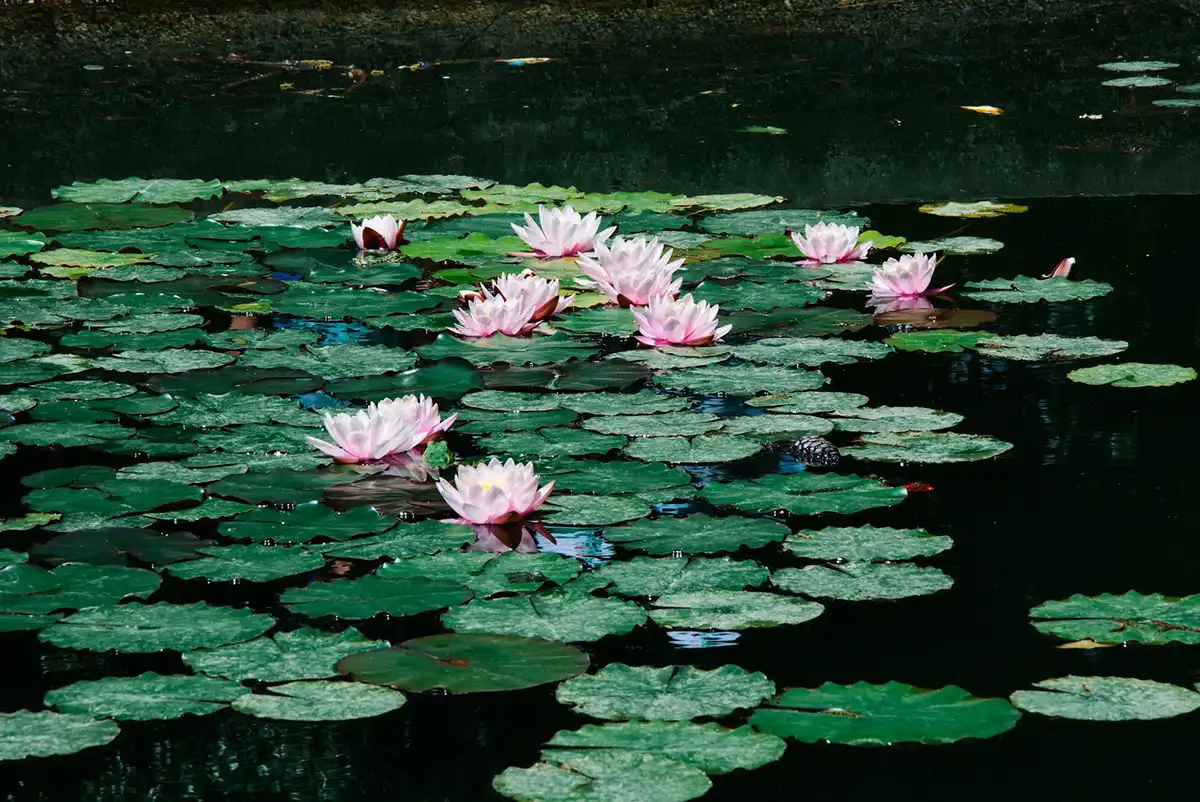
Floating plants keep their roots in the water while their leaves sit at or above the surface. They exchange gases with both air and water, and their roots can absorb nutrients directly from the pond.
In koi ponds, floating plants can provide shade and surface cover, but they need thinning when they spread too aggressively.
Submerged Plants
Submerged plants live mostly underwater and exchange gases directly through their leaves and stems. These are often called oxygenating plants because they release oxygen into the water during photosynthesis.
Examples include anacharis, hornwort, eelgrass, and similar underwater species. These plants can be valuable, but they still need proper light, circulation, and protection from koi grazing.
Bog and Marginal Plants
Bog and marginal plants grow at the pond edge, usually in wet soil or shallow shelves. Their leaves usually exchange gases with the air, while their roots tolerate wet, low-oxygen conditions better than ordinary landscape plants.
I use these plants carefully around koi ponds because they can help absorb nutrients and soften the pond edge without taking over the swimming space.
Do Aquatic Plants Help Koi Get Oxygen?
Aquatic plants can help koi by adding oxygen during daylight, absorbing excess nutrients, improving habitat, and supporting a more stable pond ecosystem. They are one part of oxygen management, not a replacement for proper aeration, circulation, and filtration.
Koi need dissolved oxygen available throughout the full day and night cycle. Plants help most when the pond also has good water movement, a properly sized pump, clean filters, and enough surface agitation.
A balanced planting plan can reduce stress on the pond. The right plants can compete with algae for nutrients, provide cover for fish, and make the water feel more natural.
Can Too Many Pond Plants Reduce Oxygen?
Yes, too many pond plants can reduce oxygen, especially at night or when old plant material begins decaying. Dense plant growth can also block water movement, trap debris, shade out lower plants, and create stagnant areas.
This is where I see homeowners get into trouble. A pond may start with a few healthy plants, then months later the plants are overgrown, the koi have less open water, and the bottom is collecting dead leaves and muck.
Penn State Extension notes that pond plants provide benefits when growth is limited, but overabundant aquatic plant growth can interfere with pond uses and damage the pond environment. In a koi pond, balance is the goal.
How Do Roots Survive Underwater?
Aquatic plant roots survive underwater because many species are adapted to wet, low-oxygen conditions. Their internal air spaces can move oxygen from leaves and stems down toward the roots.
That does not mean every plant can tolerate submerged roots. Regular landscape plants often rot when their root zone stays saturated because the soil loses oxygen.
True water plants are different. Many are built for pond margins, bog pockets, planting baskets, or full submersion, depending on the species.
Root health also depends on pond cleanliness. When the bottom is overloaded with sludge, fish waste, and decaying leaves, roots may sit in anaerobic conditions that smell sour and support unhealthy bacterial activity.
Are Your Pond Plants Struggling?
Pond plants may be struggling if leaves yellow, stems turn mushy, roots smell rotten, growth stalls, or foliage becomes covered in algae. These signs usually point to a problem with light, nutrients, oxygen, planting depth, water chemistry, or koi damage.
Yellow leaves can come from normal aging, but widespread yellowing often tells me the plant is stressed. Mushy stems are more serious because they can indicate rot.
Plants can also struggle when koi uproot them or eat tender growth faster than the plant can recover. In those cases, I may use heavier planting baskets, protective rock placement, or different plant choices that hold up better around koi.
Which Oxygenating Plants Work Best for Koi Ponds?
The best oxygenating plants for koi ponds are hardy submerged plants that can tolerate local conditions, provide underwater structure, and handle routine maintenance. Common choices include anacharis, hornwort, eelgrass, and other submerged oxygenators.
In Southern California, I also think about heat, sun exposure, fish load, and how aggressively koi interact with the planting. A plant that works in a small patio water garden may not survive in a heavily stocked koi pond in Woodland Hills, Calabasas, or Northridge.
I avoid treating oxygenating plants as a one-size-fits-all product. Plant selection should match pond depth, circulation pattern, koi size, filtration capacity, and the amount of maintenance the owner is prepared to keep up with.
What Plant Mistakes Hurt Pond Health?
The biggest plant mistakes are overplanting, choosing invasive or fragile species, ignoring dead foliage, planting at the wrong depth, and assuming plants can replace filtration. Each mistake can affect oxygen, water clarity, koi health, or maintenance workload.
Overfertilizing is another common issue. Koi waste and uneaten food already add nutrients to the water, so plant fertilizer should be used carefully and only when the plant actually needs it.
Dead foliage should be removed before it decomposes. Decomposition consumes oxygen, adds nutrients, and can contribute to odor, algae growth, and poor water quality.
Plant placement also matters. If plants block skimmers, crowd waterfalls, clog pumps, or trap debris in low-flow corners, they are working against the pond instead of helping it.
When Should a Pond Pro Check Plant Balance?
A pond professional should check plant balance when koi show oxygen stress, plants are spreading too fast, water quality is unstable, algae is persistent, or you are unsure which plants are safe for your pond. A professional evaluation is especially valuable for larger residential ponds, commercial properties, and ponds with expensive koi.
When I evaluate a pond, I look at plant coverage, fish load, pump flow, filter condition, sunlight, temperature, debris, and how the koi are behaving. Plant health and koi health are connected, so I do not judge the plants in isolation.
For Los Angeles-area ponds, I also account for long warm seasons, strong sun, dry winds, and properties with heavy leaf drop from surrounding landscaping. Those local conditions change how plants grow and how often they need thinning, trimming, or replacement.
Healthy Plant Breathing Starts With Pond Balance
Aquatic plants breathe, photosynthesize, release oxygen, consume oxygen, absorb nutrients, shelter koi, and influence the entire pond ecosystem. When they are selected and maintained correctly, they make a koi pond healthier, more stable, and more beautiful.
The key is balance. Too few plants can leave the pond exposed and nutrient-heavy, while too many plants can reduce circulation, create nighttime oxygen demand, and add decaying material.
If your koi pond needs healthier plant balance, better oxygen support, or professional plant installation, Aquatic Gardens can help you choose and maintain koi-safe aquatic plants that fit your pond, your fish, and Southern California’s climate.
About the Author
Shawn Schroeder is the founder and owner of Aquatic Gardens. He is a pond service technician with over 20 years of experience in the business. Shawn has extensive experience in koi health, aquatic plant care, pond filtration, and the chemical and biological compounds of pond water. For Shawn pond service is not just a business, but a passion as well. Shawn has taken a great interest in all fish; koi in particular, and pond construction and maintenance since he was a young boy digging holes in his parents backyard and filling them with water. To those who know him Shawn is simply “the pond guy.”