


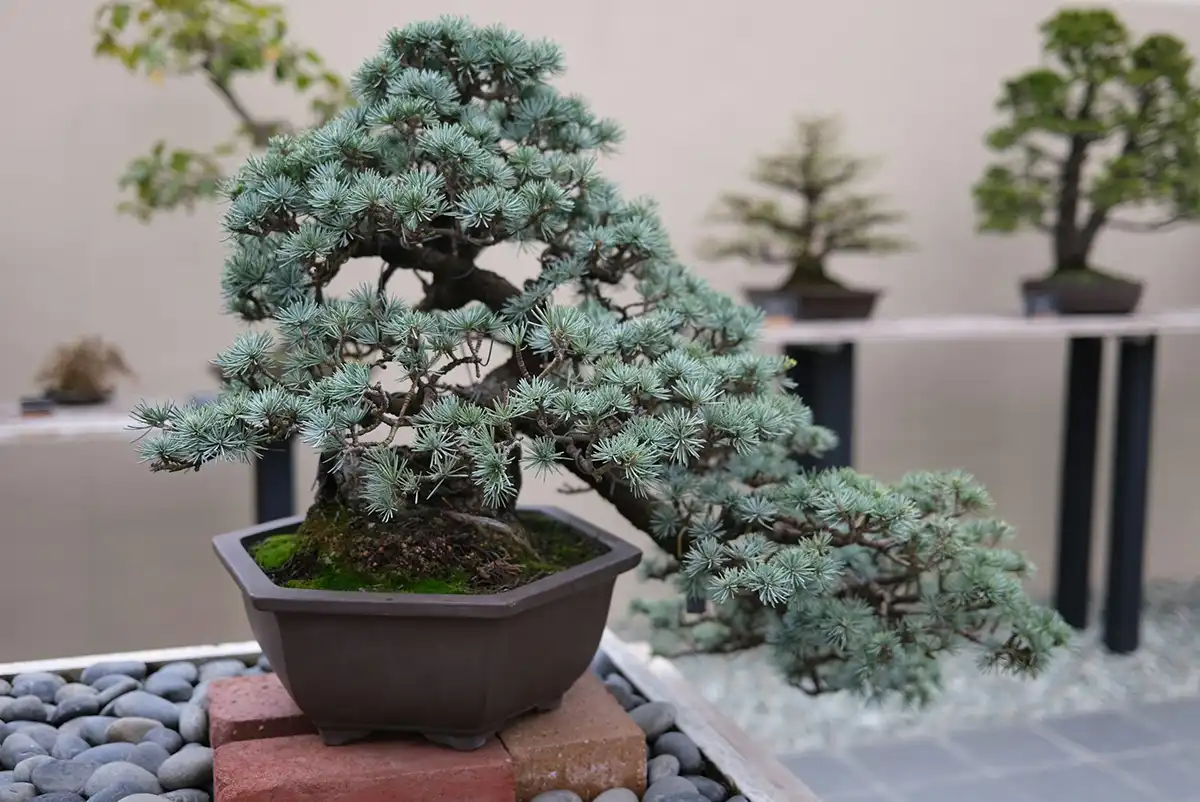
01 Oct Caring for Bonsai Plants
Healthy bonsai need species-appropriate placement, careful watering, good roots and drainage, seasonal feeding, weather protection, and regular observation.
By Shawn Schroeder
Bonsai trees may be small, but their care is every bit as involved as caring for full-size trees. I have worked with bonsai in Southern California for decades, including time at local bonsai nurseries, participation in the Bonsai Club at the San Fernando Valley Japanese Community Center, and training under Master Kunio Kobayashi in Japan. The biggest lesson I have learned is that successful bonsai care comes from understanding the individual tree rather than following a single routine.
What Does Proper Bonsai Care Include?
Proper bonsai care includes watering, placement, fertilization, pruning, root management, repotting, pest monitoring, and protection from environmental stress. Each of those jobs has to be adjusted to the species, season, container, soil, and condition of the tree.
A bonsai cannot be maintained successfully with a fixed schedule alone. A Japanese black pine, Japanese maple, Shimpaku juniper, bald cypress, and tropical bonsai can all respond differently to the same amount of sun, water, or fertilizer.
That is why I encourage owners to observe their trees frequently. Look at the foliage, new growth, soil moisture, drainage, branch condition, and overall vigor before deciding what the tree needs.
For anyone caring for bonsai plants, consistency matters, but observation matters even more.
Which Bonsai Species Thrive in Southern California?
Many traditional bonsai species can thrive in Los Angeles and Ventura Counties when their placement and care are matched to our climate. Japanese black pine, Japanese maple, Japanese white pine, Shimpaku juniper, Japanese oak, cherry blossom, and bald cypress are among the species I commonly work with.
Southern California offers a long growing season, but that does not mean every bonsai wants the same conditions. Coastal areas such as Malibu and Santa Monica can be cooler and more humid, while Woodland Hills, Calabasas, Northridge, Simi Valley, and inland areas of Ventura County can experience considerably hotter and drier conditions.
Species selection should therefore account for more than appearance. Consider summer heat tolerance, winter dormancy requirements, water needs, wind exposure, and whether you have an appropriate outdoor location.
A beautiful species that constantly struggles with its environment will require far more intervention than one suited to the property.
Should Bonsai Be Kept Indoors or Outdoors?
Most traditional bonsai should be kept outdoors because they are outdoor trees with natural requirements for sunlight, airflow, seasonal temperature changes, and dormancy. Some tropical and subtropical species can live indoors when they receive appropriate light and environmental conditions.
One of the most common misunderstandings I encounter is the idea that bonsai are houseplants simply because they are grown in pots. A miniature pine, maple, oak, or juniper still has the biological requirements of that species.
An outdoor bonsai may occasionally be brought inside for display, but keeping an outdoor species indoors for extended periods can gradually weaken it.
When deciding on placement, I consider the tree species first, followed by sun exposure, reflected heat, wind, humidity, and the microclimate around the property.
How Can You Tell if a Bonsai Is Healthy?
A healthy bonsai generally has foliage appropriate in color and density for its species, strong seasonal growth, healthy buds, firm branches, and a root system capable of absorbing water without remaining constantly saturated.
New growth is one of the most useful indicators I watch. Strong, appropriately sized shoots or buds usually tell me that the tree has enough energy to support continued development.
You should also become familiar with what is normal for your particular species. Deciduous bonsai naturally change color and lose leaves during dormancy, while evergreen species follow a different cycle.
Warning signs can include widespread yellowing, sudden leaf drop, brittle branches, weak new growth, persistent wilting, unusually wet soil, soil that dries extremely quickly, or foliage that progressively loses vigor.
The important question is whether the change fits the tree's normal seasonal behavior. If it does not, investigate the roots, watering, placement, pests, and recent weather conditions before assuming the foliage itself is the problem.
Why Does Bonsai Root Health Matter?
Root health matters because the entire tree depends on a relatively small root system confined within a container. Problems below the soil can therefore affect the foliage and branches surprisingly quickly.
Healthy roots need a balance of moisture and oxygen. If the soil remains waterlogged, roots can struggle because there is insufficient air in the root zone. If the soil dries excessively, fine feeder roots can be damaged.
Root problems are especially easy to overlook because owners usually notice symptoms above ground first. Weak growth, yellowing foliage, poor water absorption, or an unexpected decline may actually begin in the pot.
As part of professional bonsai maintenance, I evaluate soil condition and root development and determine when repotting or root work is appropriate. Root pruning should be timed carefully because excessive or poorly timed root removal can place significant stress on a valuable tree.
How Do Bonsai Pots Affect Tree Health?
A bonsai pot directly affects drainage, moisture retention, root development, temperature, and the amount of growing medium available to the tree. The pot should complement the design of the bonsai while still supporting its horticultural needs.
A shallow container can dry much faster than a deeper nursery container, especially during hot or windy Southern California weather. Small pots also have less thermal mass, which means their root zones can heat up quickly.
Drainage is particularly important. Water needs to move through the soil rather than remain trapped around the roots.
Pot size should also relate to the tree's developmental stage. A finished display bonsai may be maintained in a refined Japanese pot, while a tree still being developed may benefit from a different container that provides more room for root and trunk development.
A beautiful pot is part of bonsai presentation, but tree health always comes first.
When Should You Fertilize a Bonsai?
Bonsai should be fertilized according to the species, growing season, developmental goals, and current health of the tree. Feeding heavily simply because a tree looks weak can sometimes make the situation worse if the real problem involves damaged roots, heat stress, or improper watering.
Actively growing bonsai generally need nutrients because the small amount of soil in a bonsai container provides limited reserves. The appropriate schedule and fertilizer strength depend on the tree.
A developing bonsai may be managed to encourage stronger growth, while a refined specimen may require more controlled fertilization to maintain proportion and avoid excessively coarse shoots or foliage.
I also consider the time of year. A tree's nutrient requirements change as it moves through active growth, hardening, dormancy, flowering, or recovery from repotting.
Before fertilizing a struggling bonsai, determine whether the tree is actually capable of using those nutrients.
How Do You Protect Bonsai From Heat and Wind?
Protect bonsai from extreme heat and dry wind by adjusting placement, monitoring soil moisture more frequently, and shielding vulnerable trees when conditions become severe. Southern California heat waves and Santa Ana winds can dry a bonsai container much faster than many owners expect.
Wind is especially important because it increases moisture loss from both foliage and soil. A tree that normally stays adequately hydrated through the day may dry considerably faster during hot, low-humidity winds.
Afternoon sun can also create intense heat around patios, masonry, stucco walls, and other hard surfaces. Reflected heat may expose the tree to harsher conditions than the air temperature alone suggests.
Moving a sensitive tree temporarily into a protected position can be appropriate during extreme conditions. Depending on the species, this may mean protection from hot afternoon sun, wind, or both.
Avoid responding to heat stress by automatically flooding the pot. Check the root zone first. Proper watering means thoroughly watering when the tree needs it, rather than keeping the soil continuously saturated.
Why Is My Bonsai Dropping Leaves?
Bonsai can drop leaves because of normal seasonal changes, heat stress, watering problems, root trouble, abrupt changes in placement, pests, or other environmental stress. The pattern and timing of the leaf loss help determine what is happening.
For deciduous trees, seasonal leaf drop can be completely normal. Sudden defoliation during active growth deserves closer attention.
I first consider what changed before the symptoms appeared. Was the tree moved? Did temperatures spike? Were there Santa Ana winds? Has the soil remained unusually wet? Did the tree recently dry out? Was it repotted or heavily pruned?
Leaf color also provides useful clues. Scorched edges, generalized yellowing, isolated dead branches, wilting, and gradual thinning can point toward different problems.
Avoid making several major changes at once. Moving the tree, increasing water, adding fertilizer, spraying treatments, and pruning it simultaneously can make diagnosis harder and add more stress.
When a mature or valuable tree declines rapidly, early professional evaluation is usually safer than waiting for the symptoms to become severe.
How Do You Care for Bonsai While Traveling?
The safest way to care for bonsai while traveling is to arrange reliable watering and monitoring based on each tree's actual needs. A bonsai cannot always wait several days between checks, particularly during warm or windy weather.
Before leaving, group trees according to their watering requirements and evaluate where they will be positioned. Temporary protection from intense afternoon sun or wind may reduce moisture loss, provided the change is suitable for the species.
If someone else will be watering, give specific instructions. Telling a neighbor to "give them a little water every day" can result in some trees drying out while others remain constantly saturated.
For valuable collections, I prefer having someone experienced inspect the trees rather than relying entirely on an automatic timer. Irrigation equipment can help, but clogged emitters, disconnected tubing, pressure problems, or differences between containers can create trouble quickly.
Professional oversight becomes particularly valuable during extended travel, heat waves, or when a collection contains mature specimens with significantly different needs.
When Is Professional Bonsai Care Worth It?
Professional bonsai care is worth considering when the tree is mature, valuable, sensitive, declining, structurally complex, or beyond the owner's experience level. It can also make sense for collectors who want consistent maintenance across multiple trees.
Routine tasks such as observation and basic watering can often be handled by owners who understand their trees. More advanced work requires greater judgment.
Repotting mature bonsai, root pruning, major structural pruning, wiring, correcting long-term health problems, and maintaining highly refined trees can have lasting consequences. Removing the wrong branch or performing root work at the wrong time cannot always be corrected.
At Aquatic Gardens, our bonsai care and maintenance includes detailed tree assessment, pruning and shaping, soil and repotting evaluation, watering and fertilization guidance, pest and disease monitoring, and ongoing care recommendations.
For high-end or heirloom specimens, professional maintenance can help preserve both the health of the tree and the years of work already invested in its design.
How Do You Choose a Bonsai Professional?
Choose a bonsai professional based on practical horticultural experience, understanding of bonsai design, familiarity with local growing conditions, and the ability to explain why a particular treatment is appropriate. Bonsai care should never be reduced to generic landscaping.
I have studied bonsai since my teenage years and worked at reputable bonsai nurseries in Southern California. I am also an active member of the Bonsai Club at the San Fernando Valley Japanese Community Center and have trained under Master Kunio Kobayashi in Japan.
Those experiences have reinforced something I consider essential: bonsai maintenance requires both horticulture and artistry. Keeping a tree alive is only part of the responsibility. Good care should preserve its structure, proportion, character, and long-term potential.
When interviewing someone to care for an important tree, ask how they evaluate watering, roots, soil, placement, seasonal growth, pruning, and repotting. A qualified bonsai professional should be able to explain the reasoning behind the work rather than applying the same routine to every specimen.
Building a Long-Term Bonsai Care Routine
Successful bonsai care comes from understanding what your individual tree needs and recognizing when those needs change. Species, season, root condition, container size, weather, watering, fertilization, and placement all work together.
The best habit you can develop is regular observation. A bonsai usually gives you clues when conditions are changing, and recognizing those clues early gives you more options for correcting the problem.
For bonsai owners throughout Los Angeles and Ventura Counties, including Calabasas, Woodland Hills, Northridge, Simi Valley, Camarillo, Malibu, Santa Monica, and surrounding communities, our goal is to help protect the health and character of these trees for the long term.
If you have a mature collection, a struggling tree, or a specimen that needs experienced pruning, repotting, placement, or ongoing maintenance, contact Aquatic Gardens for professional Japanese bonsai tree management. Proper care today can preserve a bonsai's beauty and vitality for many years and, in some cases, for generations.
About the Author
Shawn Schroeder is the founder and owner of Aquatic Gardens. He is a pond service technician with over 20 years of experience in the business. Shawn has extensive experience in koi health, aquatic plant care, pond filtration, and the chemical and biological compounds of pond water. For Shawn pond service is not just a business, but a passion as well. Shawn has taken a great interest in all fish; koi in particular, and pond construction and maintenance since he was a young boy digging holes in his parents backyard and filling them with water. To those who know him Shawn is simply “the pond guy.”